
Youth voices on…
Breaking down the barriers into sports leadership roles for underrepresented young people.
Leadership Skills Foundation invited young people to share their perspectives on how the Sports and Physical Activity sector can improve pathways into volunteering and employment.
This consultation was part of a pilot for The Speak Up Challenge, a new youth voice programme for 14-19 year olds designed to:
help participants build the skills and confidence to take the lead in campaigning for improved opportunities for young people.
provide a platform for their views and ideas to be taken seriously by professionals and policy makers.
Who was involved?
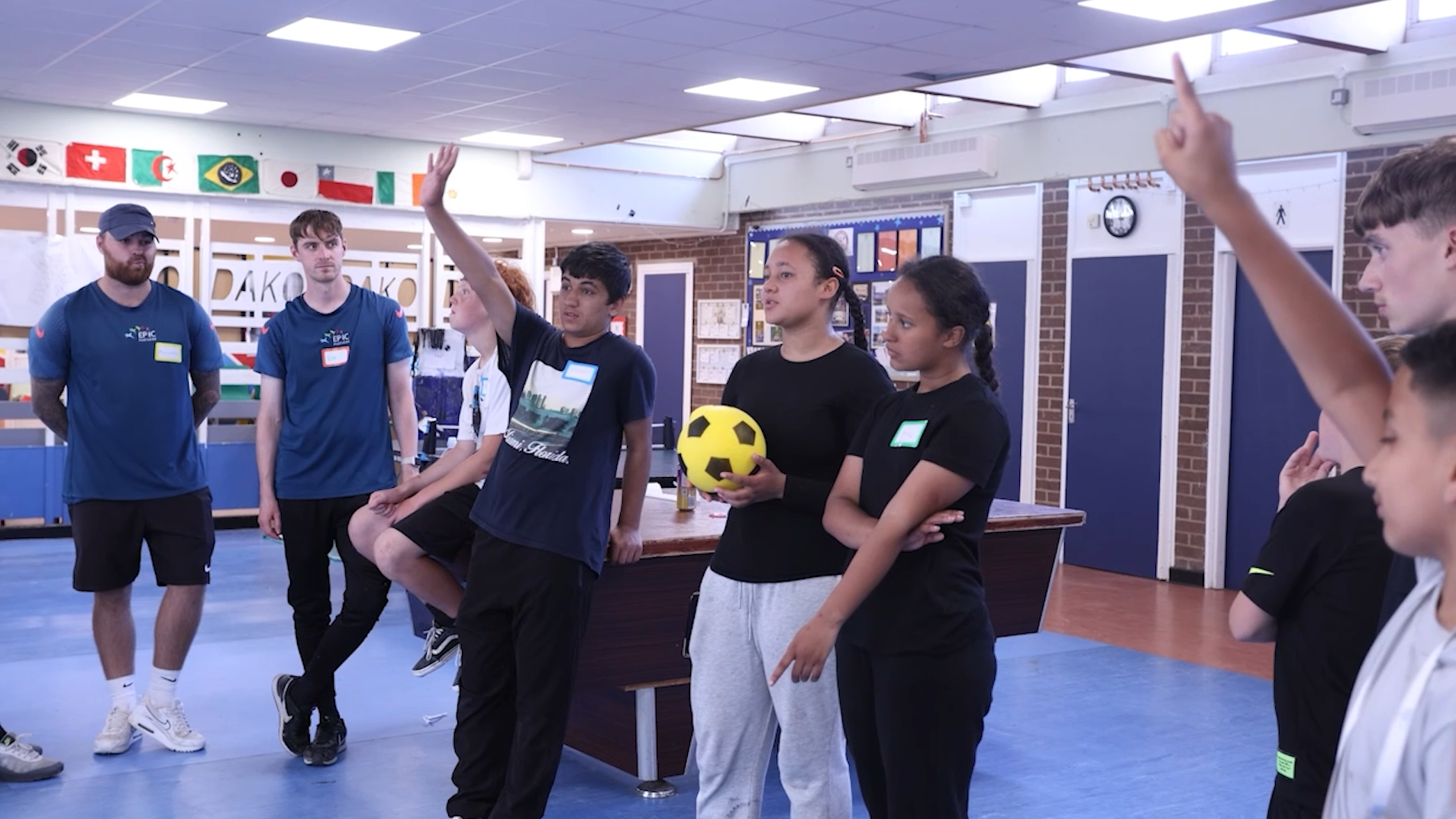
104 young people from Derby College, Belle Vue Girls Academy and IMO Charity based in Blackburn Youth Zone took part in the challenge. Participants were 48% male and 52% female.
All three centres are located in areas ranked amongst the 15–18% most deprived nationally (IMD) and serve highly diverse, multi-ethnic populations of young people.
How did they participate?
Through a series of group skills-building activities focused on teamwork, problem solving and communication, they shared their perspectives in which ever way they felt most confident.
Participants chose various ways to present their views: group discussion, mindmaps, witten text, voice notes, videos and spoken presentations.
Scroll down to explore their perspectives…
Identifying the barriers
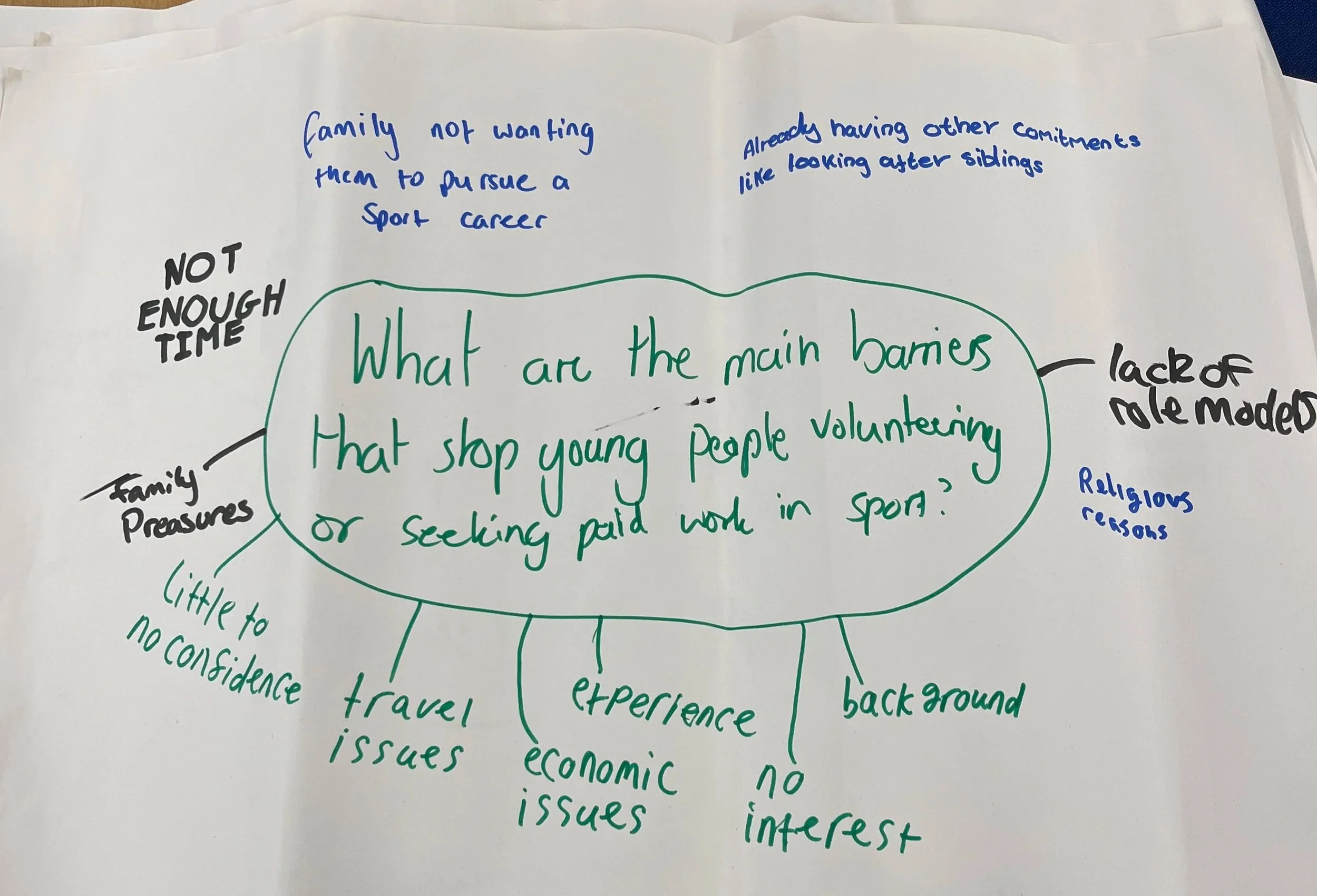
Common themes emerged between the groups of young people that participated.
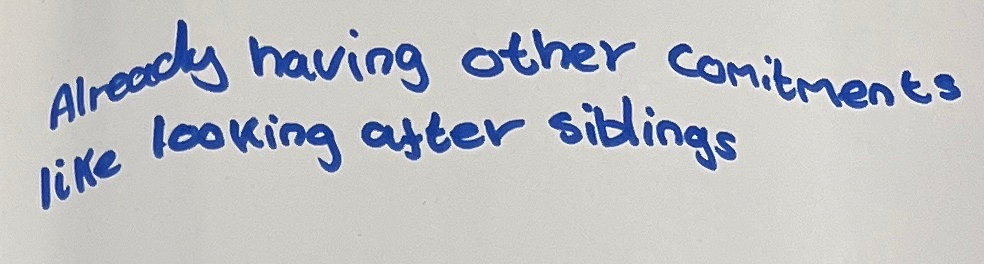
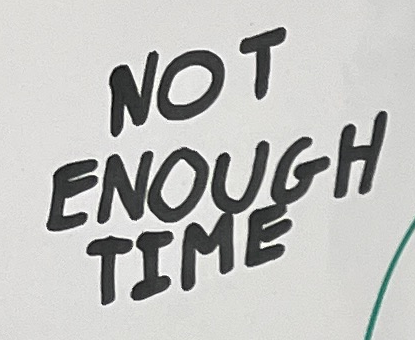
The difficulty of balancing time commitments in a busy schedule filled with other education, work, family, social, and personal sporting commitments, was seen as a barrier.
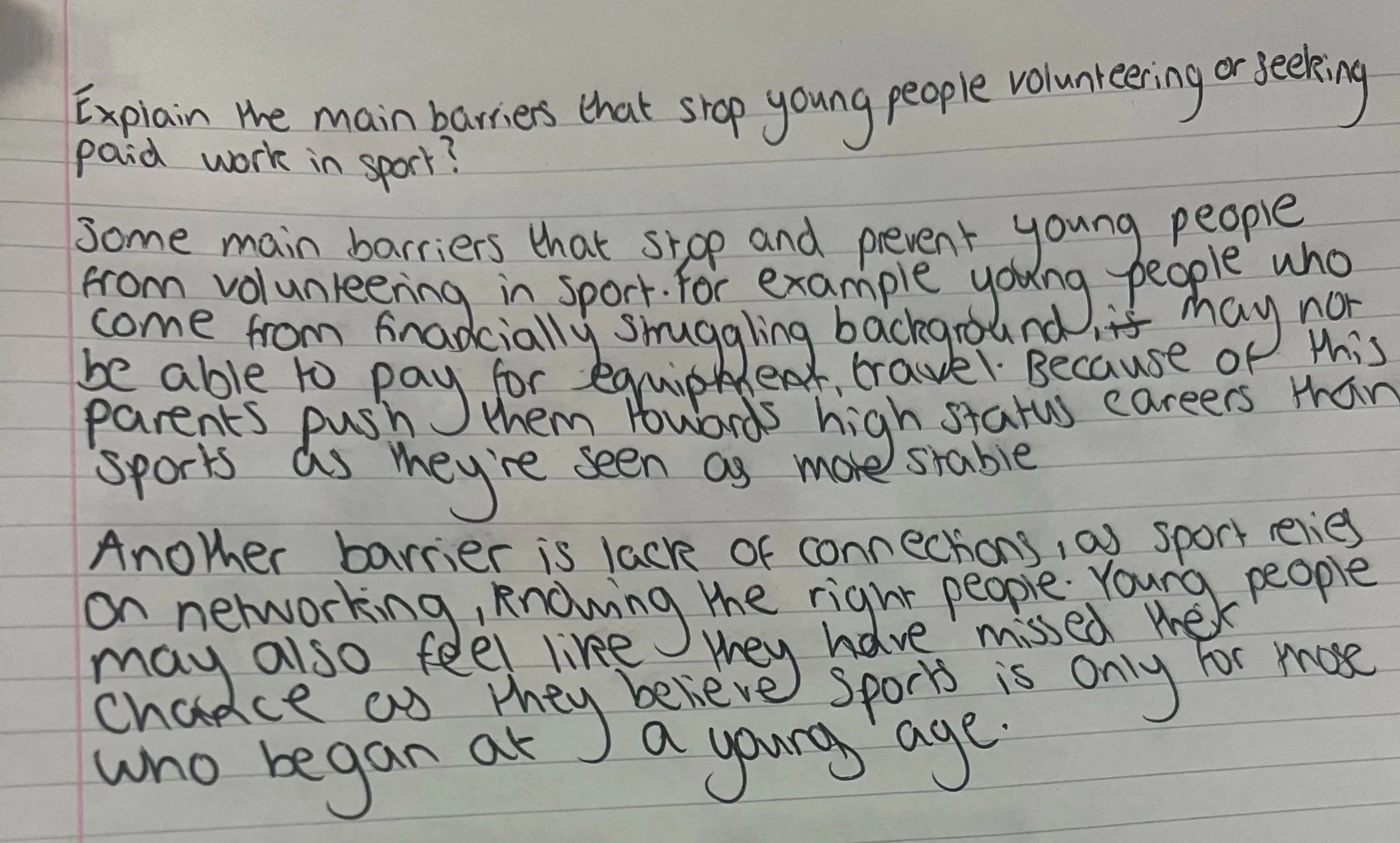
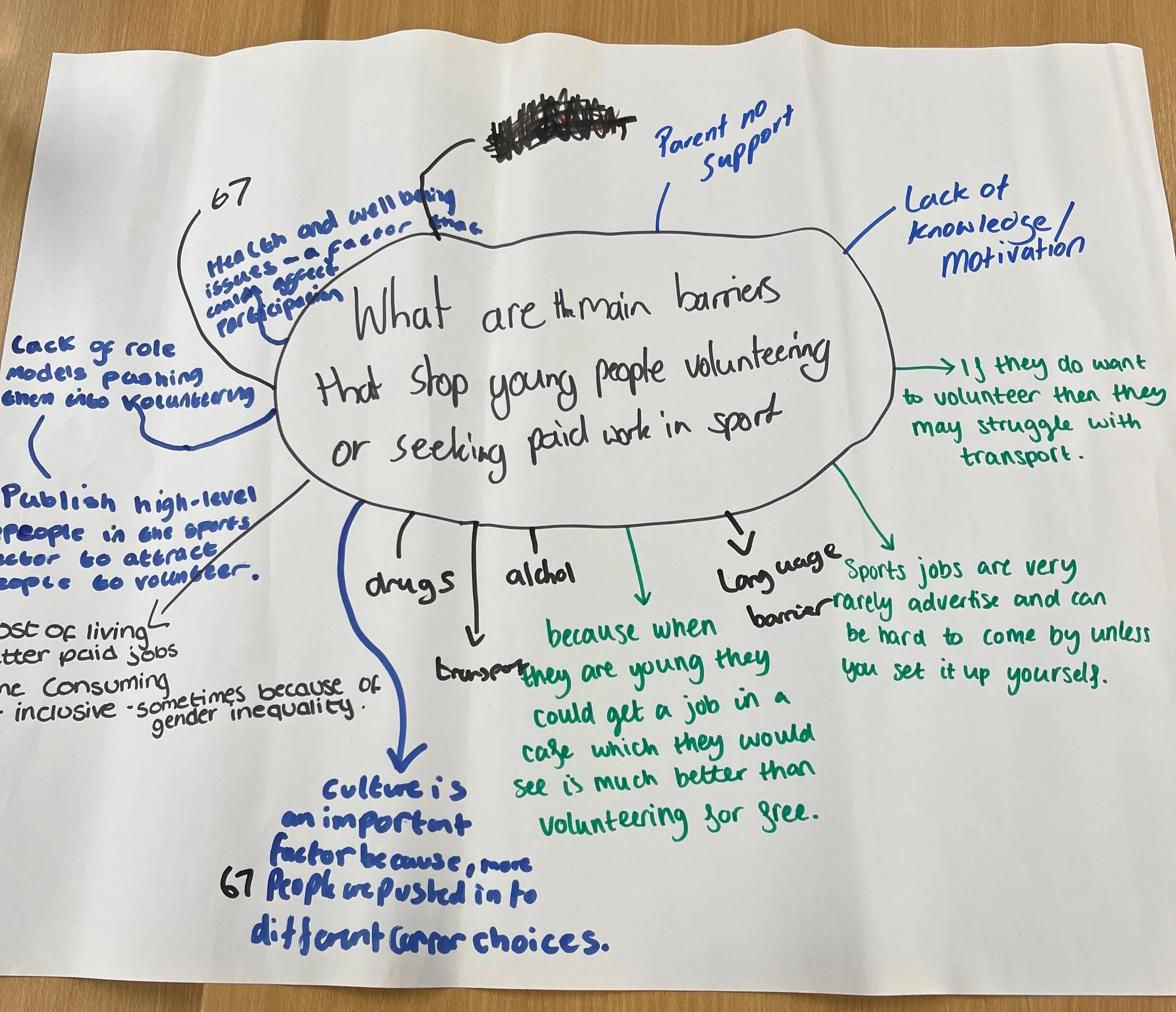
Participants agreed that financial barriers are a real blocker to young people accessing sports volunteering opportunities and following pathways into paid work. They saw a tough choice between gaining experience in unpaid roles and bringing in immediate income through part-time jobs (e.g in retail or cafes). One participating tutor noted that many of the young people in their group are from low-income families and are required to top up their household income through part-time work.
Participants also highlighted the cost of coaching qualifications and purchasing sports equipment.
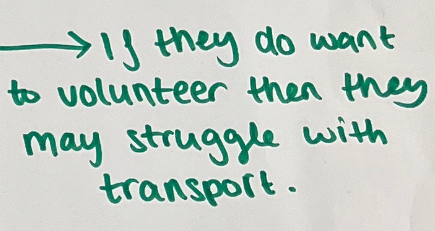
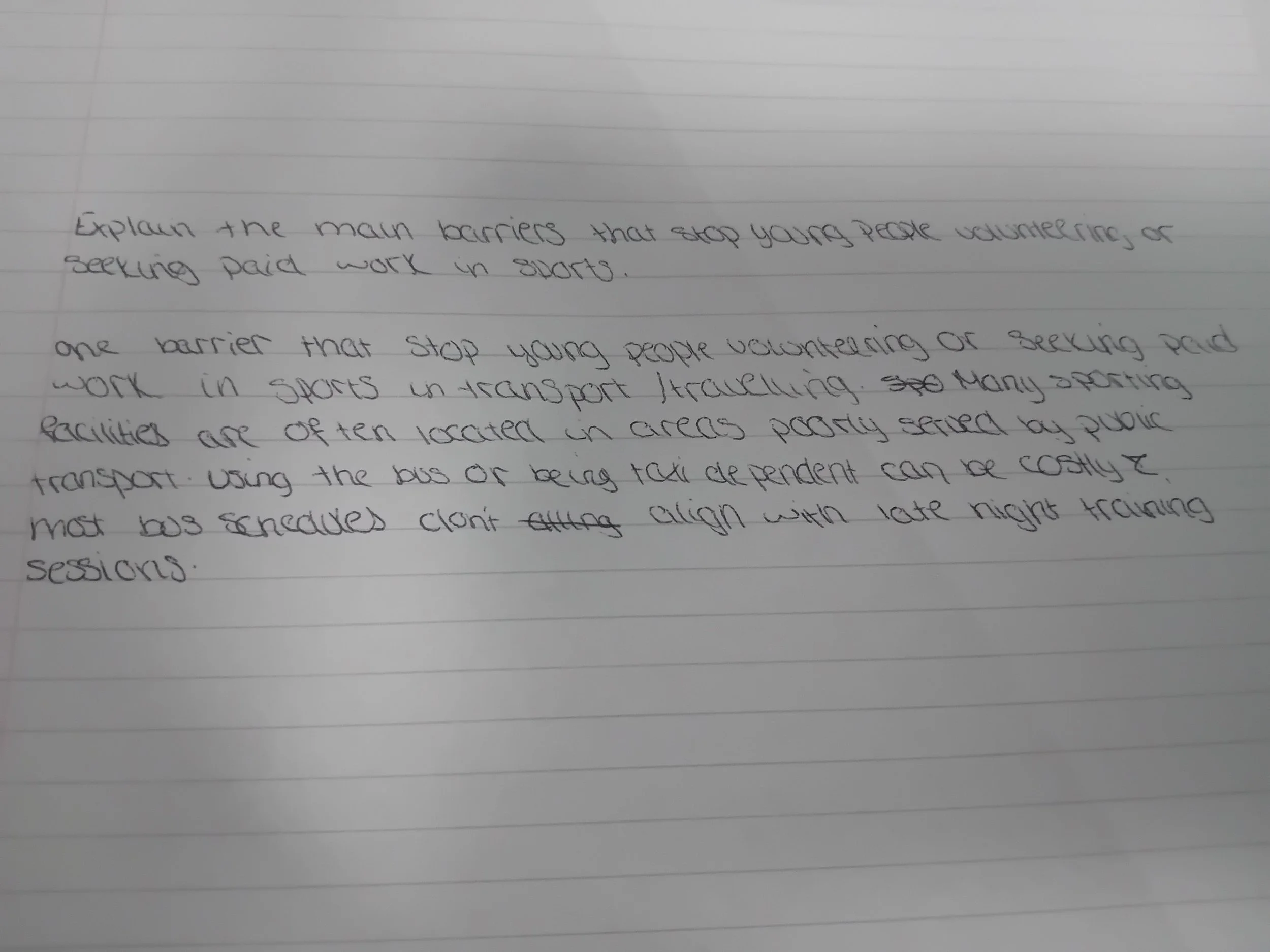
Transport was also seen as a barrier. There was agreement that transport costs are overly expensive, and sports facilities are often poorly served by public transport.
Some participants felt they didn’t have enough opportunities local to them, and a common perception was that opportunities are not well advertised.
The lack of role models was a consistent theme across groups: participants noted the absence of visible, relatable figures in sports leadership roles to provide direction and ambition.
Some participants also perceived sporting environments to be male-dominated, not inclusive, and unwelcoming to the LGBTQ+ community.
Lack of confidence in their own abilities was also raised as a factor. Young people may not view themselves as having the skills to contribute effectively.
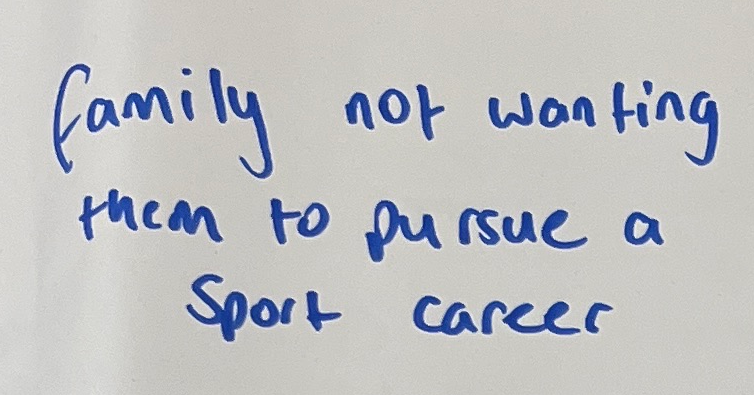
There was also a perception from some of the participants that jobs in the sports workforce are not as respected as other careers, and they would face pressure from families to pursue a different path.
“When young people get to an age where they can volunteer they are more focused on looking for paid jobs that they can do currently instead of having to do work for no payment.”
“Low confidence. They do not have enough experience.”
“When they are young they could get a job in a cafe which they would see is much better than volunteering for free.”
“Lack of time- School, Jobs and exams get in the way.”
“There is a big lack of advertisements for volunteering opportunities which mean that children and young people often dont know about them.”
“Cost of travel, kit, training Courses and qualifications can be expensive.”
“Culture is an important factor because more people are pushed into different career choices.”
“Lack of role models. They do not often see people their age in these roles so it becomes increasingly harder for them to see themselves in that role.”
Ideas for change
After exploring the barriers, participants were challenged to share their ‘big idea’ for change through a choice of spoken presentations, creating poster boards or group discussion.
Their ideas addressed a number of priorities, including helping young people build the confidence and skills to lead, promoting inclusion, making travel cheaper and easier and providing financial support for costs such as qualifications. Some ideas identified the need for clearer pathways that make volunteering feel more connected to real job opportunities.
Other ideas focused on making it easier to take part, such as running activities at more convenient times (e.g. holidays and weekends) and increasing the number of local opportunities. There was also a suggestion about making sports volunteering more cause-focused as this was seen as a motivator for young people.
Another idea was about meeting underrepresented young people within their own communities and cultures. This included using familiar community spaces, like mosques, and adapting sports sessions to respect cultural practices, for example, offering female-only sessions where needed.
‘Super Speedy’ is an idea to fund transport so young people can get to opportunities easily and cheaply.
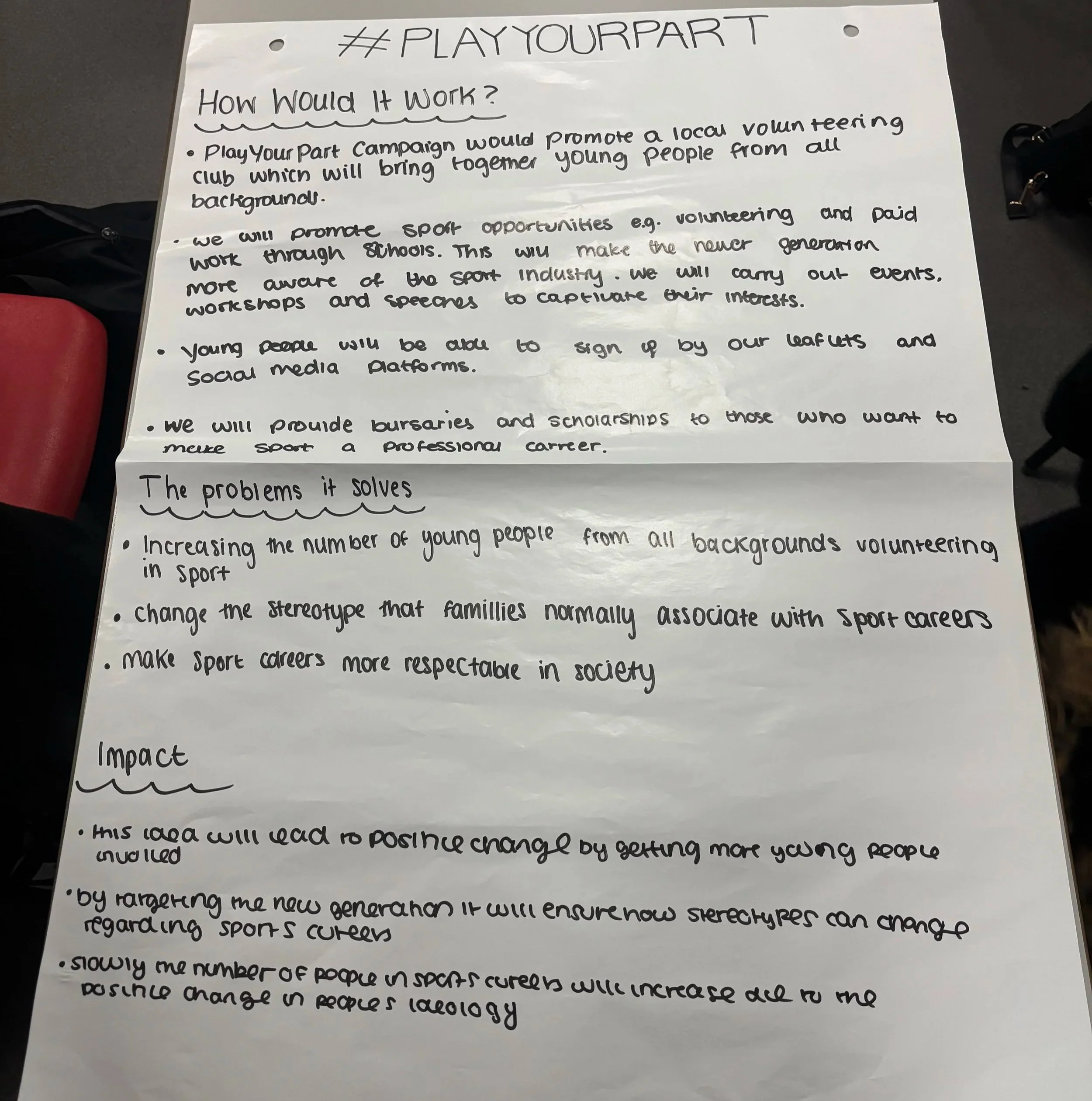
‘#PlayYourPart’ suggests a need to challenge ideologies about sports careers and make them more respectable in society. Also includes financial bursaries and scholarships to help young people progress on their pathway.
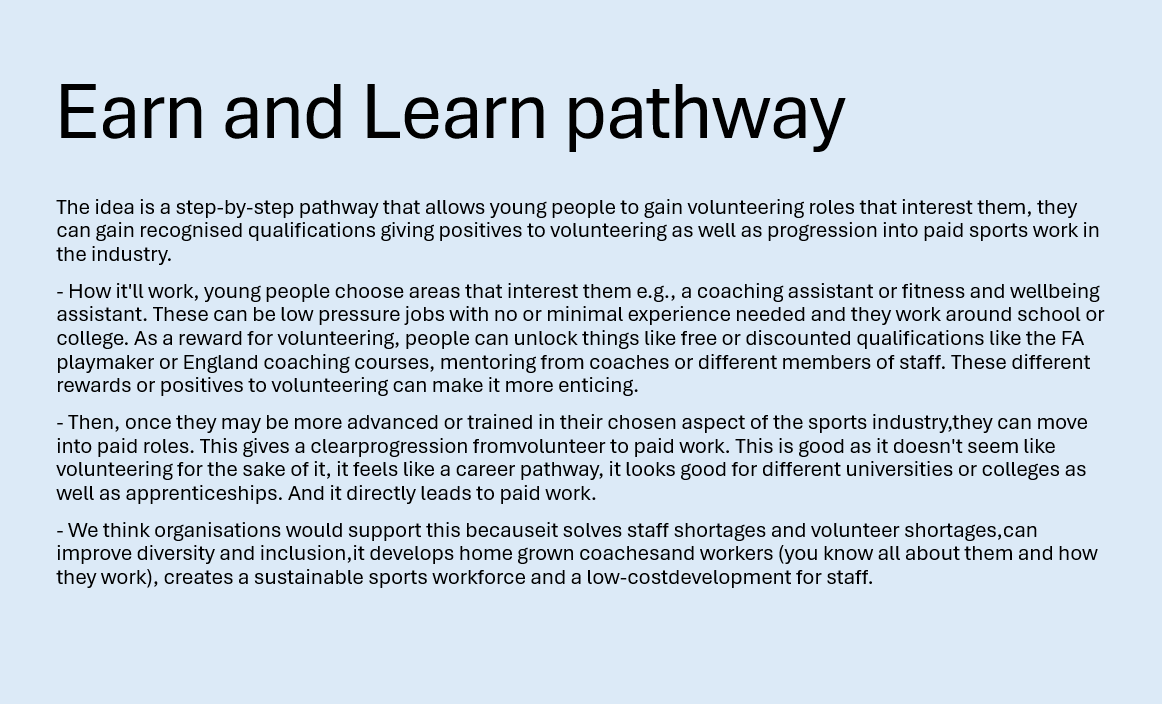
‘Earn and Learn pathway’ is an idea to reward volunteering with free or discounted qualifications.
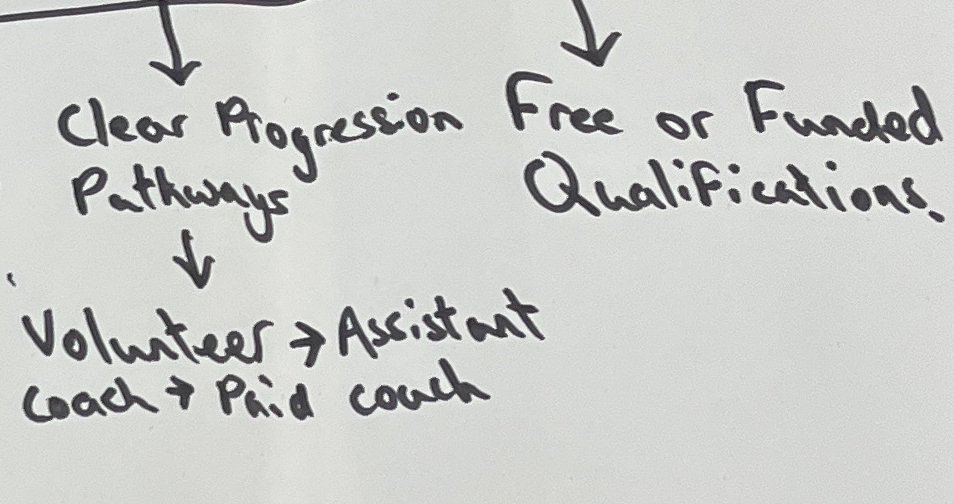
‘Small Act, Big Impact’ calls for funding from government to help young people afford the necessities involved in volunteering.
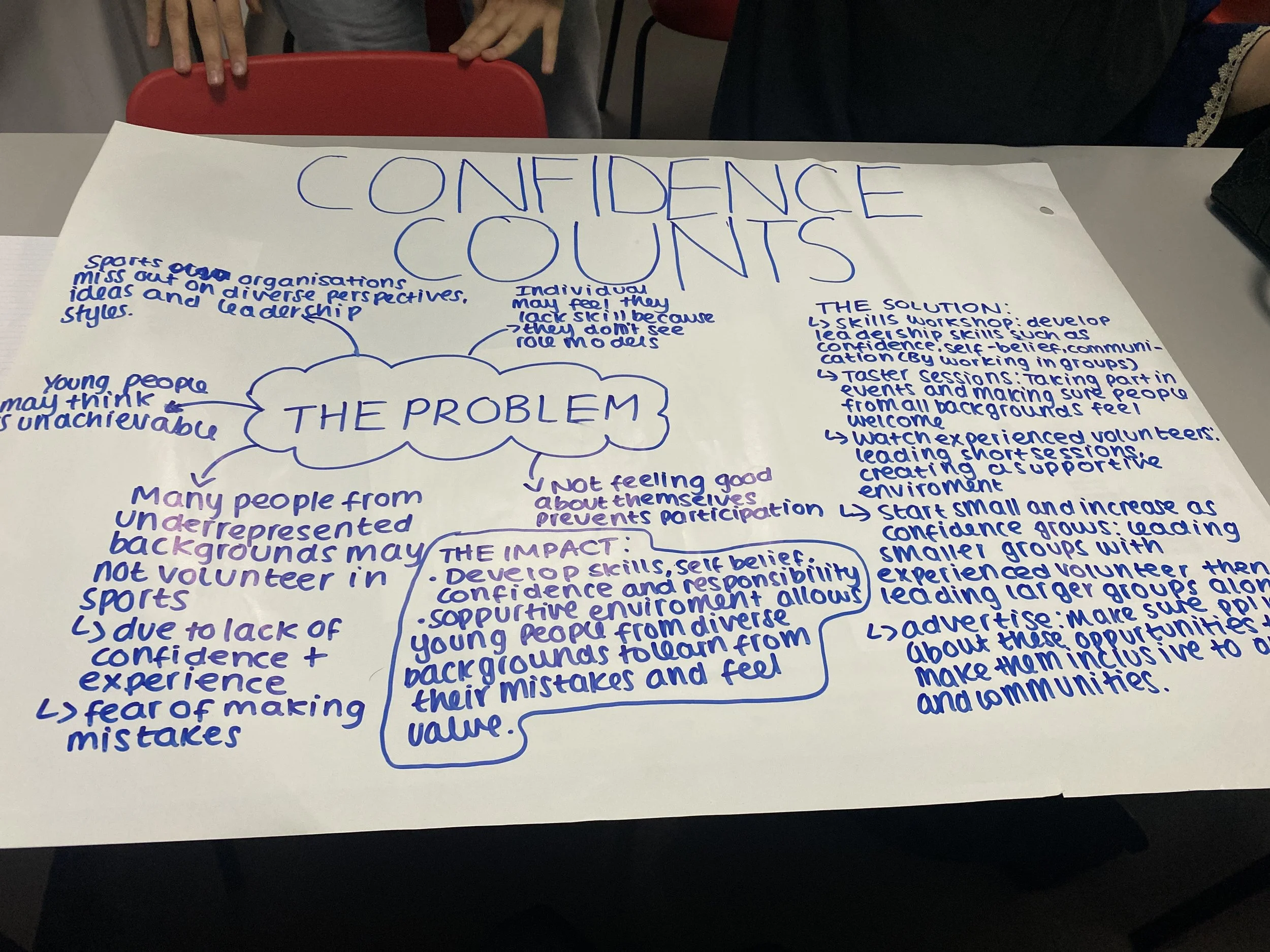
‘Confidence Counts’ is an idea to create skills workshops to help people build confidence to volunteer.
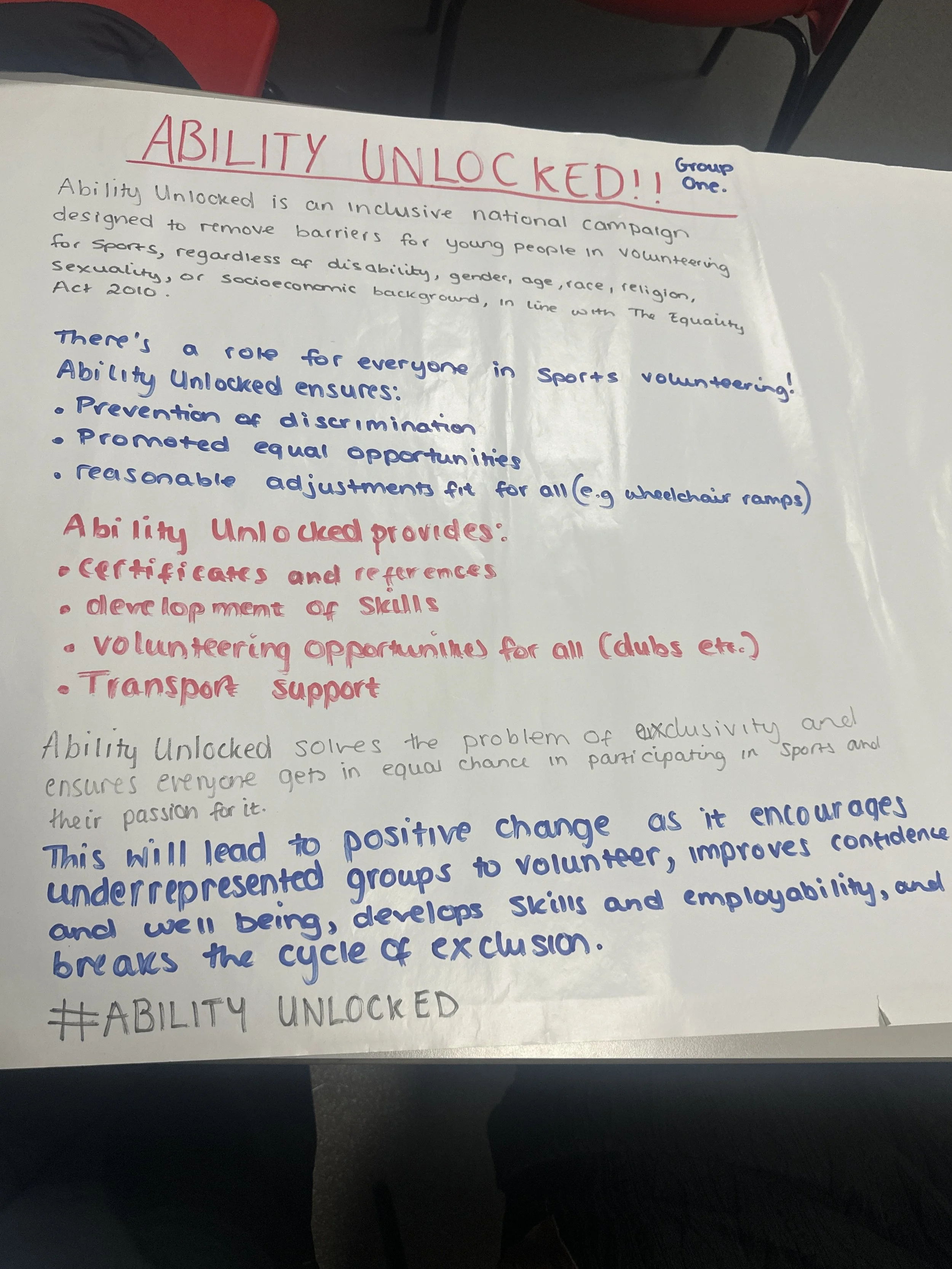
‘#Ability Unlocked’ calls for the creation of a national campaign to solve the problem of exclusion, and more support for reasonable adjustments for all e.g wheelchair ramps and transport.
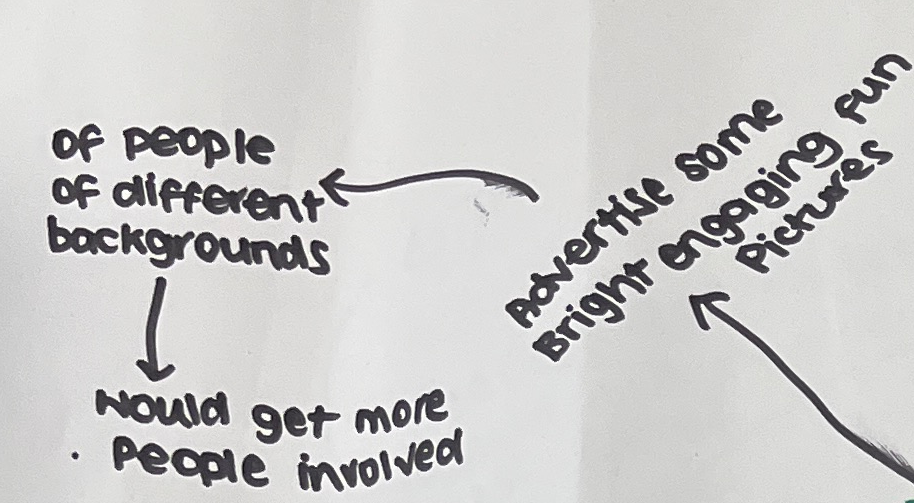
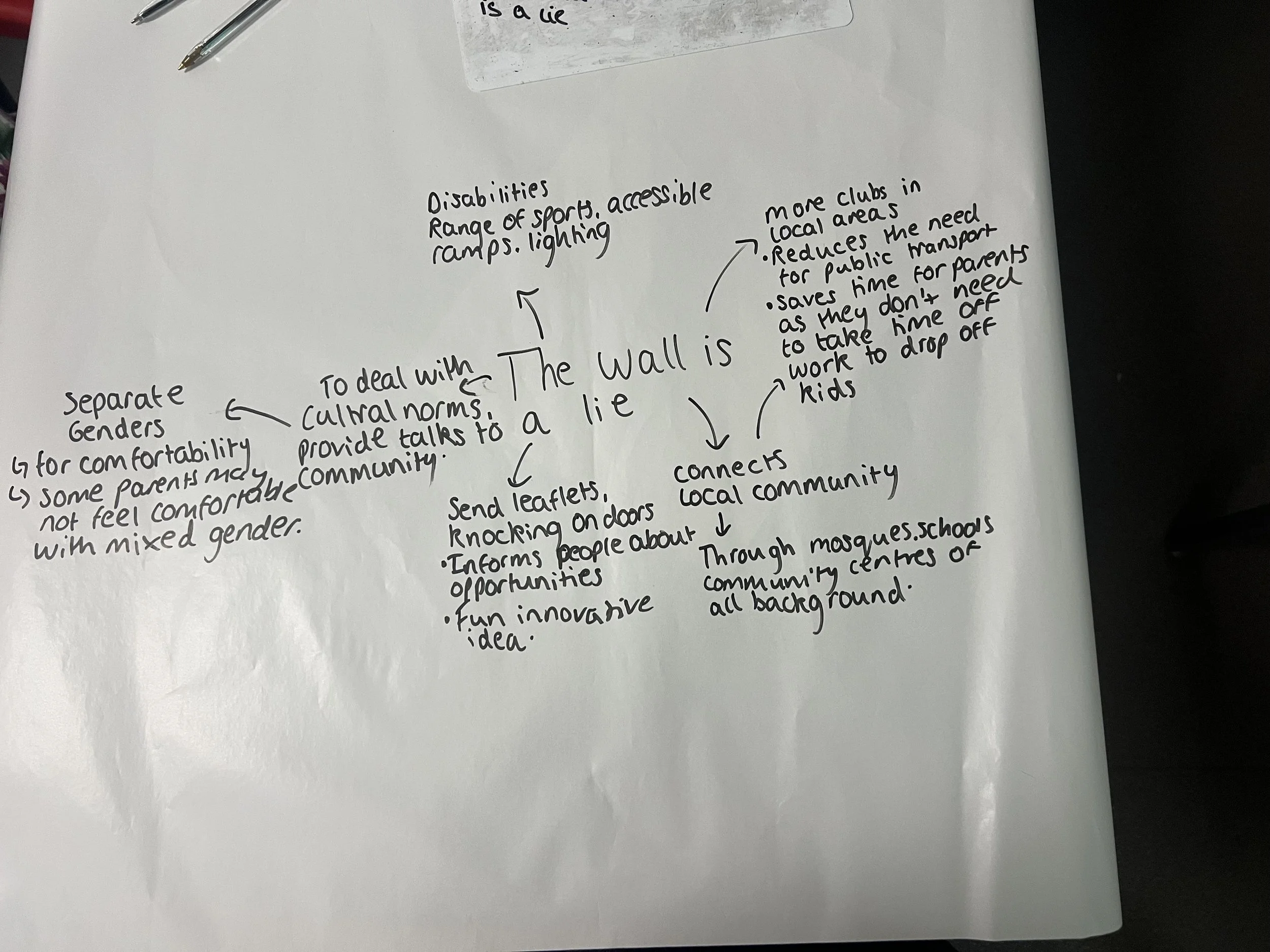
‘The wall is a lie’ recommends aligning to cultural norms by hosting single-gender sessions and running activities through mosques and community centres.
‘Rise Beyond Your Fears’ suggests aligning sports volunteering with good causes to motivate young people to get involved.
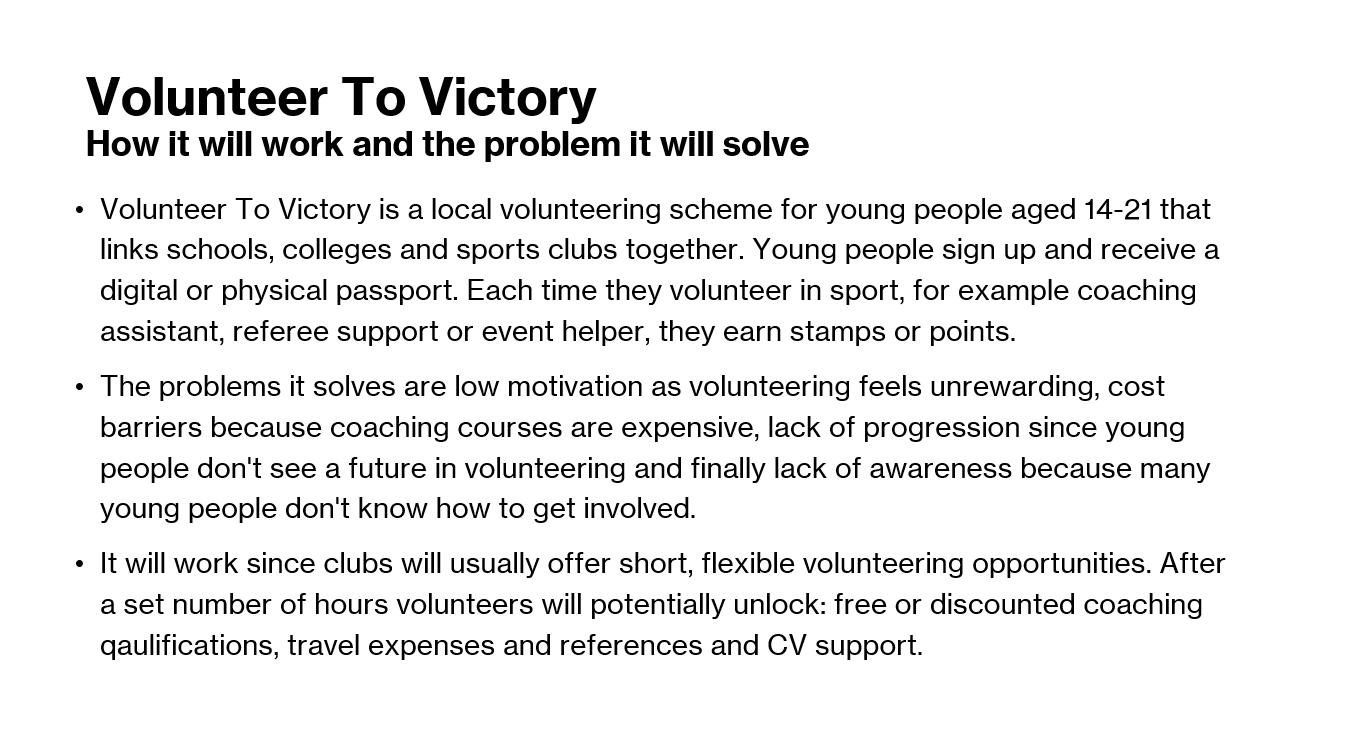
‘Volunteer To Victory’ is an idea for a passport scheme that young people can use to gain qualifications and demonstrate their progression to universities and employers.
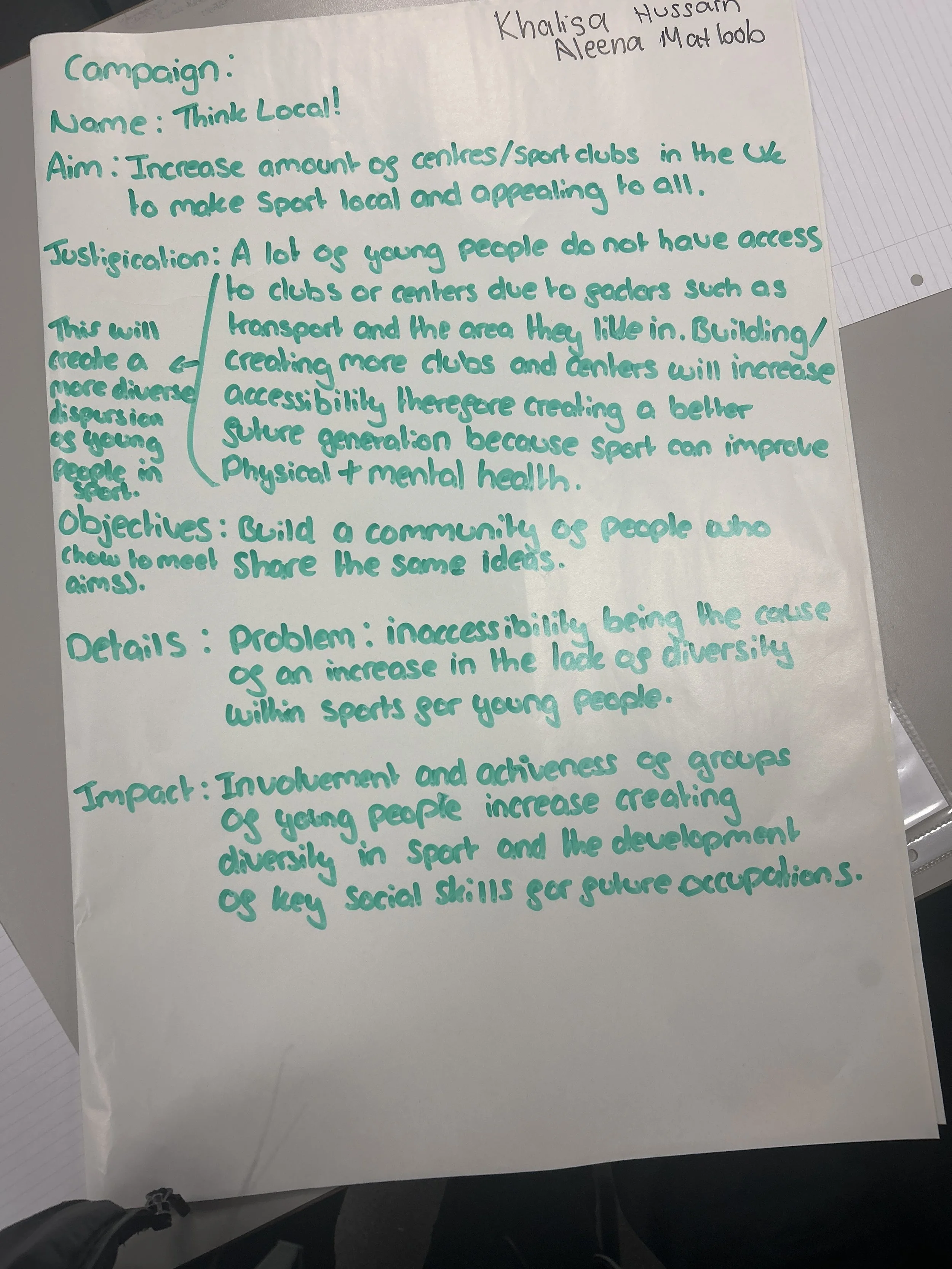
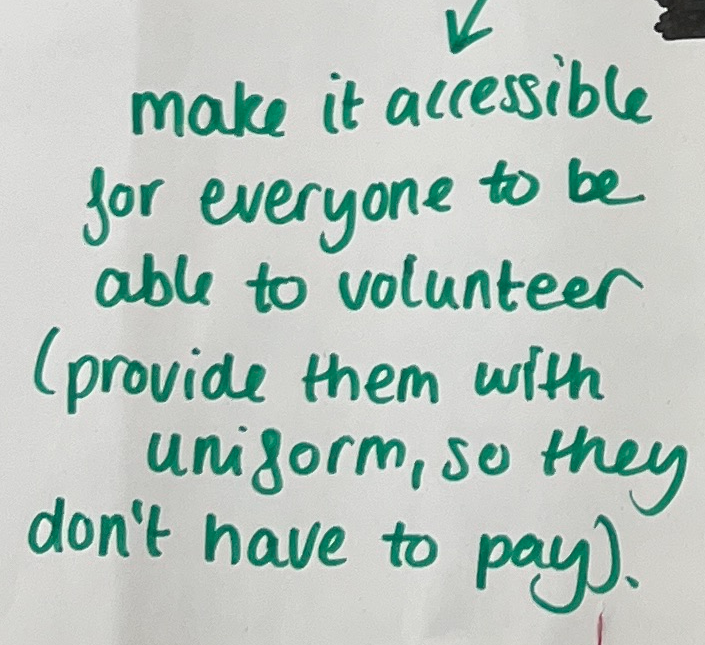
‘Think Local!’ is an idea to increase the amount of sports clubs and centres to make sport local and appealing to all.
Summary
Across the three centres and 104 learners involved, young people spoke up for:
The need to increase young people’s confidence and skills.
Solutions to reduce the financial and practical burdens of volunteering and working in sport.
Clearer pathways from volunteering to paid work.
A desire to see better inclusion, accessibility and representation.
Improved awareness and greater number of local opportunities to lead.
The need to meet underrepresented communities where they are, both physically and culturally.
Challenging perceptions of Sports and Physical Activity careers to make them more appealing.
The response from professionals and policy makers.
Colleagues from the Sports and Physical activity sector were invited to respond to the views and ideas raised. The young people involved were presented with this feedback in the weeks following the challenge.
Here is a short edit of some of the responses: